Showing posts with label sagas. Show all posts

Wednesday, September 3, 2014

Snorri and the Volcanoes


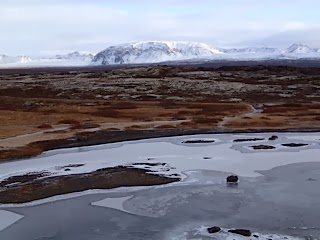
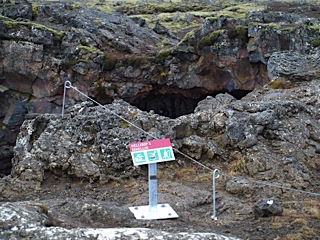
There’s a volcano erupting in Iceland again. They happen quite often—I saw one in 2010, when I took these photos, just before it shut down European airspace with clouds of ash.

Eruptions are a fact of life for Icelanders. A big one happened in 871 (plus or minus two years): The dark layer of ash it sprinkled over much of the country now helps archaeologists date the time of the first settlement of Iceland to just about that time, using a technique called tephrachronology. Another big eruption in 1104 laid down a layer of ash in a conveniently lighter color, which helps archaeologists bracket the Viking Age.

Geologists estimate ten volcanic eruptions per century took place between Iceland’s founding in the 870s and when the Icelandic sagas began to be written in the early 1200s. Then the frequency increased to about fifteen per century.

So why are eruptions essentially missing from the sagas?


Only once, in Kristnisaga, the Saga of Christianity, is an eruption a plot point. The chieftains were meeting in the year 1000 to debate whether Iceland should become Christian, as the king of Norway insisted. A rider broke into the proceedings to shout, “Earth fire! In Olfus!” A volcano had erupted on one of the chieftains’ farms.

“It is no wonder. The gods are angry at such talk,” people muttered.

“And what were the gods angry about,” said one chieftain, gesturing to the black, ropy lava all around, “when they burned the wasteland we’re standing on now?”


The great Icelandic writer Snorri Sturluson, subject of my book, Song of the Vikings, grew up in the shadow of a volcano. Hekla, the cloud-hooded mountain known in the Middle Ages as the Mouth of Hell, erupted twice during Snorri’s lifetime. Possibly three times, for the church annals record “darkness across the south” the year he turned five.

The annalist knew what caused that darkness. The Saga of Bishop Gudmund, written in the mid-1200s, contains this explanation (translated here by my friend Oren Falk of Cornell University):

“There are mountains in this land, which emit awful fire with the most violent hurling of stones, so that the crack and crash are heard throughout the country.… Such great darkness can follow downwind from this terror that, on midsummer at midday, one cannot make out one’s own hand.”


To the east of Snorri’s childhood home rose the ice cap of Eyjafjallajokull--from under which erupted the volcano I visited in 2010. Snorri would have seen only tier upon tier of vast blank whiteness, a glimmering dome mingling with the clouds so that on some days the horizon disappeared.

But Snorri’s contemporaries were aware that active volcanoes lurked beneath the ice. A thirteenth-century poet told how “glaciers blaze,” “coal-black crags burst,” “fire unleashes storms,” and “a marvelous mud begins to flow from the ground.” (Again, in Oren’s translation.)

Lava also spouted from the sea in Snorri’s lifetime, forming rugged black islands that rose above the waves only long enough for a few intrepid souls to row out and give them a name, the Fire Islands.

It is not surprising, then, that volcanoes also informed Snorri’s version of the creation of the world.


In the beginning, Snorri wrote in his Edda, there was nothing. No sand, no sea, no cooling wave. No earth, no heaven above. Nothing but the yawning empty gap, Ginnungagap. All was cold and grim.

Then came the giant Surt with a crashing noise, bright and burning. He bore a flaming sword. Rivers of fire flowed till they turned hard as slag from an iron-maker’s forge, then froze to ice.

The ice-rime grew, layer upon layer, till it bridged the mighty, magical gap.

Where the ice met sparks of flame and still-flowing lava from Surt’s home in the south, it thawed and dripped. Like an icicle it formed the first frost-giant, Ymir, and his cow.

Ymir drank the cow’s abundant milk. The cow licked the ice-rime, which was salty. It licked free a handsome man and his wife. They had three sons, one of whom was Odin, the ruler of heaven and earth, the greatest and most glorious of the gods: the All-father.

Odin and his brothers killed Ymir. From his giant body they fashioned the world: His flesh was the soil, his blood the sea. His bones and teeth became stones and scree. His hair were trees, his skull was the sky, his brain, clouds.

From his eyebrows they made Middle Earth, which they peopled with men, crafting the first man and woman from an ash tree and an elm they found on the seashore.


So Snorri explains the creation of the world in the beginning of his Edda. Partly he is quoting an older poem, the “Song of the Sibyl,” whose author he does not name. Partly he seems to be making it up—especially the bit about the world forming in a kind of volcanic eruption, and then freezing to ice.

This part of the myth cannot be ancient. The Scandinavian homelands--Norway, Sweden, and Denmark--are not volcanic. But there is nothing so characteristic of Iceland as the clash between fire and ice.

Wednesday, November 20, 2013

The Saga Man: Arni Magnusson

Lovers of Icelandic sagas are celebrating these days: It's the 350th birthday of Arni Magnusson, the man who, more than anyone else, saved Iceland's medieval manuscripts.

Brought up at Snorri Sturluson’s ancestral estate of Hvamm in the west of Iceland, Arni went to Copenhagen in 1683, when he was 20 years old, and found work as a copyist and translator for Thomas Bartholin, Jr. With Arni's help, Bartholin published a 700-page history of the Danes in 1689. Drawing examples from Snorri’s Heimskringla, Egil’s Saga, and other sagas, Bartholin’s Danish Antiquities Concerning the Reasons for the Pagan Danes’ Disdain for Death made popular the Viking stereotype of the bold, blond, laugh-in-the-face-of-death hero.

Arni became a professor at the University of Copenhagen in 1701, and the next year the king sent him back to Iceland to gather statistics on his country’s land and people. His massive Land Register, compiled over ten years, describes every farm in Iceland, its size and shape, buildings, people, cows, sheep, horses, the bulk of butter and cloth it owed in tithes, the quality of its turf, peat, hay, and woodlots, its fishing and driftwood rights, and the extent of the property ruined by volcanic ash or sand or rendered useless by quagmires, bogs, erosion, or flooding.

Off the record, Arni asked every farmer about manuscripts—and poked about in every farmhouse. In his novel Iceland's Bell, Halldor Laxness imagines Arni searching every nook and cranny, even the stuffing of the mattress:

Dust and poison gushed up from the old and moldy hay within the woman’s bed as they began their search. Mixed up in the hay was all kinds of garbage, such as bottomless shoe-tatters, shoe-patches, old stocking legs, rotten rags of wadmal, pieces of cord, fibers, fragments of horseshoes, horns, bones, gills, fishtails hard as glass, broken wooden bolts and other scraps of wood, loom-weights, shells both flat and whorled, and starfish. 

There were often also scraps of parchment in hiding places like this: Arni collected every one. He found two leaves from a 13th-century manuscript with holes punched in them to make a flour sifter. He found sheets used as dress patterns, shoe soles, knee patches, and even the stiffening in a bishop’s mitre. He pieced them back into books: One 60-page manuscript came from eight different farms.

When Arni's collection was packed for shipping to Copenhagen in 1720, it filled 55 wooden chests and required 30 packhorses to carry it.

Then in 1728 Copenhagen caught fire. Half of the city was incinerated, including the university library. Arni, disbelieving that fate could be so cruel, refused to evacuate his private library until the fire reached the end of his street. He and two other Icelanders had time to rescue only the oldest books. The rest were lost, including, Arni cried, “books that will never and nowhere be found until doomsday.”

We can only guess what wonderful sagas they held.

But the rest of Arni's collection now fills two libraries named for him, the Arni Magnusson Institute in Iceland and the Arnamagnaean Institute in Copenhagen. The Icelandic one held its birthday celebration last week; Copenhagen's is coming up on Friday. (For details see http://nfi.ku.dk/kalender/arne350-seminar/) I'm looking forward to tipping a glass to Arni's memory.

Join me again next Wednesday at nancymariebrown.blogspot.com for another adventure in Iceland or the medieval world.

Wednesday, November 13, 2013

A Visit to Thingvellir

On a sunny day in Iceland, when I'm traveling east out of Rekjavik, it's almost impossible not to detour to Thingvellir, as I did last week.

Approaching these Assembly Plains in 1871, William Morris wrote, "My heart beats, so please you, as we near the brow of the pass, and all the infinite wonder, which came upon me when I came up on the deck of the [ship] to see Iceland for the first time, comes on me again now, for this is the heart of Iceland…"

In spite of his flowery Victorian prose style, Morris speaks for me too: My heart does beat faster when I see the great rift valley of Thingvellir beside its deep blue lake.

Here is where the tectonic plates are pulling apart, America getting infinitesimally farther from Europe with each passing year.


And here, on the tenth Thor's Day of summer each year from 930 to 1262, Icelands chieftains and their wives and children and followers gathered for the Althing, the General Assembly of all Iceland.


In the medieval Icelandic sagas--what Morris familiarly calls "those old stories"--the Althing is a grand party. Thousands of people stayed for two weeks in tents and turf-walled booths on the banks of the Axe River, drinking ale, telling tales, taking part in horse fights and wrestling matches, races and dice games, making wedding plans or finalizing divorces, witnessing court cases, and wrangling over the law.


Disputes between Icelanders of any rank could be settled at the Althing, by appeal to Iceland's laws. There was no king to enforce the laws. Instead, there were five law courts: one for each quarter of the country plus an appeals court, each with 36 judges. The judges were chosen by the chieftains, each chieftain being allowed to nominate or to veto a certain number.


Presiding over the courts was Iceland's only elected official, the Lawspeaker. The first Lawspeaker brought the laws of western Norway to Iceland in 930. For nearly two hundred years, until 1118, the Lawspeaker recited from memory one third of the law code at each Althing. After that, the laws were read aloud from a lawbook.


The place where he stood to recite, the Law Rock, is marked now by a flagpole. (Notice that the flag is hanging limp. It's almost never this calm in Iceland.) This height of land, with its backdrop of columnar basalt, formed a natural amphitheatre. The chieftains gathered below the Law Rock and, after the recitation, the laws were debated, adjusted, and agreed upon for, as it says in Njal's Saga, "With laws shall our land be built up, but with lawlessness laid waste."


There were laws concerning stolen horses, rented cows, dogs that bit, or bulls that ran amok in the neighbor's haystacks. There were laws about betrothals and divorces, buying sheep or claiming debts. There were laws concerning the welfare of orphans, widows, the sick, the handicapped, and the poor. There were laws about renting land or investing in a trading ship. There were numerous laws defining murder and homicide, setting the compensation a killer should pay the victim's family if he hoped to avoid being exiled from the island.

Of course, not everyone followed the laws and not every feud was peacefully settled. One of the great themes of the Icelandic sagas is what happens when someone defies the law.


Of Iceland in general, William Morris wrote, “It is an awful place: set aside the hope that the unseen sea gives you here, and the strange threatening change of the blue spiky mountains beyond the firth, and the rest seems emptiness and nothing else: a piece of turf under your feet, and the sky overhead, that's all; whatever solace your life is to have here must come out of yourself or these old stories, not over hopeful themselves."


Iceland is indeed an awful place: a place that fills me with awe. "Whatever solace your life is to have here must come out of yourself or these old stories." Is it different anywhere else?

Join me again next Wednesday at nancymariebrown.blogspot.com for another adventure in Iceland of the medieval world.

Wednesday, November 6, 2013

Touring Saga Land

I'm in Iceland, for the 18th time, to learn more about the sagas. And although today is a library day (gray skies, spitting rain, fierce wind), I'm hoping to visit some saga sites over the weekend. I might rent a car, or even take a bus tour.

When I first went to Iceland in 1986, saga tourism was minimal. I, like many writers before and since, wanted to see the places made vivid and unforgettable by the medieval authors: 

Where Njal and his wife, their house afire, their enemies surrounding it, refused to come out. Said Njal, "I am an old man now and ill-equipped to avenge my sons; and I do not want to live in shame." Said Bergthora, "I was given to Njal in marriage when young, and I have promised him that we would share the same fate." 

Where Gunnar's horse stumbled and he spoke the famous lines, "How lovely the slopes are, more lovely than they have ever seemed to me before, golden cornfields and new-mown hay. I am going back home, and I will not go away."

But these places were on working farms and the farmers, understandably, treasured their privacy. I passed by on the main road, looked from afar, was never quite sure I'd found the right spot.

Now, I'm happy to say, there's a museum devoted to Njal's Saga at Hvolsvöllur [www.njala.is] in southern Iceland, offering exhibits and guided tours to the saga sites. There's even a community-wide activity, embroidering the Story of Burnt Njal in the style of the Bayeux tapestry.

In fact, according to an Icelandic publication called The Museum Guide 2013, there are currently 134 museums in Iceland--for a population of 320,000. Can you imagine 134 museums in Pittsburgh, PA or St. Louis, MO? Of these 134, by my count 11 focus on the sagas or the Viking Age. 

In addition to the Saga Centre in Hvolsvöllur, one of my favorites is the Settlement Centre in Borgarnes in western Iceland. [www.settlementcentre.is] One of its exhibits explores the settlement of Iceland between 870 and 930, as told in the sagas; the other tells the story of Egil's Saga through renderings by modern artists. An audio guide for your smartphone allows you to drive around the vicinity and find the places mentioned in the saga.

Such as the farm of Borg, where Egil, depressed, lay down to die after the drowning of a beloved son. One of his daughters craftily revived his will to live by getting him to make a poem about it, the beautiful “Lament for My Sons”: 
My mouth strains
To move the tongue,
To weigh and wing
The choice word:
Not easy to breathe
Odin’s inspiration
In my heart’s hinterland,
Little hope there… 

The poem is as much about poetry, the “purest of possessions,” the “word-mead,” as it is about the dead boy. “Now I feel it surge, swell / Like a sea, old giant’s blood.” As he created the poem, the saga says, “Egil began to get back his spirits.” When it was finished, he took his seat in the hall and declaimed the lament before all the family. 

A little further inland is Snorrastofa [www.snorrastofa.is], a museum, library, and research centre named for the 13th-century writer Snorri Sturluson on the site of his estate, Reykholt. Snorri may have written Egil's Saga. He is better known as the author of Heimskringla, a set of 16 sagas that contain almost everything we know about the history of Norway from its foundation to 1177. His masterpiece, though, is the Edda, which is our major (and sometimes our only) source for the stories of Norse mythology. 

In my biography of Snorri, Song of the Vikings, I imagine him in the hot-tub at Reykholt, regaling his friends with the story of Odin's eight-legged horse, Sleipnir:

One day while Thor was off fighting trolls in the east, a giant entered the gods’ city of Asgard. He was a stonemason, he said, and offered to build the gods a wall so strong it would keep out any ogre or giant or troll. All he wanted in return was the sun and the moon and goddess Freya for his wife.
The gods talked it over, wondering how they could get the wall for free. “If you build it in one winter, with no one’s help,” the gods said, thinking that impossible, “we have a deal.”
“Can I use my stallion?” the giant asked.
Loki replied, “I see no harm in that.” The other gods agreed. They swore mighty oaths.
The giant got to work. By night the stallion hauled enormous loads of stone, by day the giant laid them up. The wall rose, course upon course. With three days left of winter, it was nearly done.
“Whose idea was it to spoil the sky by giving away the sun and the moon—not to mention marrying Freyja into Giantland?” the gods shouted. They wanted out of their bargain. “It’s all Loki’s fault,” they agreed. “He’d better fix it.”
Loki transformed himself into a mare in heat. That evening, when the mason drove his stallion to the quarry, his horse was uncontrollable. It broke the traces and ran after the mare. The giant chased after them all night and, needless to say, he got no work done. Nor could he finish the wall the next day with no stone. His always-edgy temper snapped. He flew into a giant rage. The gods’ oaths were forgotten. Thor raised his terrible hammer and smashed the giant’s skull.
Eleven months later, Loki had a foal. It was grey and had eight legs. It grew up to be the best horse among gods and men. 

There's a wonderful exhibition about Snorri Sturluson's life and art at Reykholt now. Last June I spent a good hour or two going through it with a group of tourists from the horse-trekking company America2Iceland. I had very few quibbles with the text--not surprising, since it was written by Óskar Guðmundsson, whose masterful 2009 biography, Snorri: Ævisaga Snorra Sturlusonar 1179-1241, inspired me to write Song of the Vikings. 

We dipped our fingers in Snorri's hot-tub, before mounting our horses to continue our week-long trek through the countryside of Borgarfjord. Yes, you guessed it, I am now leading saga tours myself. They're not precisely the kind of tours I was looking for in 1986--but I hadn't discovered the joys of riding Icelandic horses back then. If you'd like to join me in 2014, visit America2Iceland.com and put your name on the list.


Join me again next week at nancymariebrown.blogspot.com for another adventure in Iceland or the medieval world.

Wednesday, September 25, 2013

The Death of Snorri Sturluson


In 2010, on the night of Snorri Sturluson’s murder, September 23, I sat on the stones surrounding his hot tub at Reykholt in western Iceland and dabbled my feet in the warm pool. The weather had turned: A cold mist replaced the sunshine of Thingvellir, where I’d walked, picking blueberries, that afternoon, memorizing the verse on the bronze plaque beside Snorri’s Althing booth, the place he called Valhalla. In English the lines run:

Snorri’s old site is a sheep-pen; the Law Rock is hidden in heather,
blue with the berries that make boys—and the ravens—a feast.

I knew the next two lines of this poem by Jónas Hallgrimsson (in the translation by Dick Ringler):

Oh you children of Iceland, old and young men together!
See how your forefathers’ fame faltered—and died from the earth!

And knew its fears were unsubstantiated: Researching Snorri Sturluson’s life for my book Song of the Vikings, I had concluded that Snorri, who lived from 1178 to 1241, was the single most influential writer of the Middle Ages.

For that we must thank the king of Norway, Hakon IV. Only fourteen when Snorri met him in 1218, King Hakon preferred the fashionably new French legends of King Arthur and the Knights of the Round Table to traditional Viking skaldic poetry and tales of the gods Odin, Loki, and Thor. Snorri must have been shocked. It also hit him in the pocketbook. Poetry was Iceland’s cultural capital, to use a term popularized by sociologists. It was all Snorri had to sell on the international market. Iceland’s other exports were wool and dried fish. The bright-colored alum-dyed cloth from England and Flanders was more highly prized, and Norway had ample fish.

Perhaps, Snorri thought, King Hakon was just ill-educated. He simply needed a good introduction to the lore of the North. Snorri began writing his books to teach the young king to appreciate his own heritage.

His motives were not pure. Snorri was not only a poet and lover of books. He was one of the richest men in Iceland, holder of seven chieftaincies, owner of five profitable estates and a harbor, husband of an heiress, lover of several mistresses, a fat man soon to go gouty, a hard drinker, a seeker of ease prone to soaking long hours in his hot-tub while sipping stout ale, not a Viking warrior by any stretch of the imagination, but clever. Crafty, cunning, and ambitious. A good businessman. So well-versed in the law that few other Icelanders could out-argue him. At age forty-two, he was at the height of his power.

His secret ambition was to rule Iceland—and he almost succeeded. On the quay at Bergen in 1220, departing for home, he tossed off a praise poem about the king’s regent, Earl Skuli, said to be the handsomest man in Norway for his long red-blond locks. In response, the earl gave him the ship he was to sail in and many other fine gifts. Young King Hakon honored Snorri with the title of landed man, or baron, one of only fifteen so-named. The king charged Snorri, too, with a mission: He was to bring Iceland—then an independent republic of some 50,000 souls—under Norwegian rule.

Or so says one version of the story. The other says nothing about a threat to Iceland’s independence. Snorri was not asked to sell out his country, simply to sort out a misunderstanding between some Icelandic farmers and a party of Norwegian traders. A small thing. A few killings to even out. A matter of law.

This trip to Norway was the turning point of Snorri’s life. One quick, persuasive speech to the king, along with one colorful poem pronounced on the quay at Bergen, would mar his reputation—and seal his doom. When he sailed to Norway in 1218 he was, by most calculations, the uncrowned king of Iceland. When he returned in 1220, he was a suspected traitor.

The voyage did not go well. It was late in the year to sail, and the weather in the North Atlantic was fierce. His new ship lost its mast within sight of Iceland; it wrecked on the Westman Islands off the southern coast. Snorri had himself and his bodyguard of a dozen men ferried over to the mainland with their Norwegian treasures. They borrowed horses and rode, bedecked in bright-colored cloth like courtiers, wearing gold and jewels and carrying shiny new weapons and sturdy shields, to the nearby estate of the bishop of Skalholt. There Baron Snorri’s new title was ridiculed. Some Icelanders even accused him of treason, of having sold out to the Norwegian king.

From then until his death in 1241, he would fight one battle after another (in the courts, or by proxy) to see who, if anyone, would be Earl of Iceland, deputy to Norway’s king. He would die in his nightshirt, cringing in his cellar, begging for his life before his enemies’ thugs. He did not live up to his Viking ideals, to the heroes portrayed in his books. He did not die with a laugh—or a poem—on his lips. His last words were “Don’t strike!” As the poet Jorge Luis Borges sums him up in a beautiful poem, the writer who “bequeathed a mythology / Of ice and fire” and “violent glory” to us was a coward: “On / Your head, your sickly face, falls the sword, / As it fell so often in your book.”

Yet his work remains. In the twenty turbulent years between his Norwegian triumph and his ignominious death, while scheming and plotting, blustering and fleeing, Snorri Sturluson did write his books: the Edda, Heimskringla, and Egil’s Saga. He covered hundreds of parchment pages with world-shaping words, encouraging his friends and kinsmen to cover hundreds of pages more.

I had come to Reykholt to keep vigil on the night of his death. The clouds crept up on me as I drove north from Thingvellir, slowly, on the torturous, washboard roads of Uxahryggir and Kaldidalur, alone for hours, no other cars, not even a bird, only the gleaming presence of Skjaldbreidur over my shoulder, the inverted smile of Ok, a chunk of rainbow here and there, a hidden stream, patches of dirty snow, a cairn. Now, at Reykholt, I sought darkness—some place I could see if the northern lights were shining in celebration of Snorri’s life and art.

Snorri’s Reykholt is much the same as it was in 1241, though nothing medieval but his hot-tub remains: Beside an imposing church is a school, hotel, and library. Up a spiral stair is a writer’s studio. But the modern designers were in love with light. Streetlamps and spotlights washed the night sky everywhere but here, at Snorri’s pool, tucked beneath the hill beside the school. I leaned back and looked up—no northern lights; the stars were faint, veiled in cloud. I imagined Snorri’s last moments.

His enemy (and former son-in-law) Gissur of Haukadal had spies watching Reykholt. Late at night on September 23, 1241, he rode up with seventy men. They broke into the building where Snorri slept. He leaped out of bed in his nightshirt and ran next door into the fine Norwegian-style loft-house he had built at the height of his power twenty years before. He was heading, perhaps, for his writing studio and the secret spiral stair that led from it down into a tunnel to his hot-tub and escape…

It is cold in Iceland in late September. The birch leaves are bright gold, the berry shrubs crimson, the songbirds have all flown. Swans flock in the marshlands, sounding their haunting note. Night falls quickly and lingers long, the wind has the bite of ice. An old fat man in his nightshirt, barefoot, would not get far in the cold and dark of a late-September night.

Snorri hid in a cellar. A priest gave him away. Gissur sent five men down.

I dried off my feet and headed back toward the Snorrastofa writer’s studio, which I had booked for five days. On the way I heard people oohing and aahing. They were halfway down the drive, looking up at the northern lights, they said. I saw nothing. “They’re breaking up now,” said a man standing in the road.

Turns out that I, like Snorri that fateful night 772 years ago, had been looking the wrong way.

Join me again next Wednesday at nancymariebrown.blogspot.com for another writing adventure in Iceland or the medieval world.


Wednesday, September 11, 2013

Surtshellir: The Outlaw's Cave


To explore the Outlaw's Cave, my friend told me, you need "a headlamp and serious shoes." I had a headlamp, though it malfunctioned and would only point straight down. On my feet I had rubber Wellington books--not up to clambering over hummocks of toaster-sized lava-rubble without twisting an ankle. I didn't make it far into the cave.

I never saw the statues a local artist had placed there--eerie faces carved of rock, I'd heard.

I missed the ice formations that apparently linger year round.

I gave up well before I reached the outlaws' hideout, thoroughly freaked out by being alone in the unimaginable dark, some 30 feet under a lava field on the fringe of Iceland's uninhabitable interior. If I cried for help, no one would hear.

Usually cavers don't come to Surtshellir alone. And most are more courageous than I. In fact, so many tourists have reached the outlaws' hideout, some 600 feet along this lava tube, that Icelandic archaeologists have launched a rescue excavation to learn what they can about the outlaws' house before the evidence disappears. As archaeologist Guðmundur Ólafsson  and his colleagues noted in 2004, tourists "were removing bones from it as souvenirs."

Surtshellir means "the cave of Surtr," the Norse fire-giant who will destroy the world. The lava in which the cave is found flowed shortly after Iceland was settled in the 870s. A mile-long tube, or tunnel, the cave was formed by thicker lava congealing around a faster flowing central stream that eventually ran out. At its broadest, the tube is about 45 feet wide and 30 feet high, though it shrinks down to about 6 feet high. In some places it branches out into side tunnels. In other places, the roof has fallen in, leaving large holes to the sky.

Beneath one of these sky holes, about 300 feet from the cave's mouth, the outlaws built a wall about 8 feet high and 43 feet long. Another 300 feet along a side passage stands "a unique drystone structure with an associated midden," or garbage dump, according to the archaeologists.

One of the first books written in Iceland, the Landnámabók or Book of Settlements (from about 1130) notes that outlaws lived in in the lava field near Surtshellir in the late 900s. Two of the Icelandic sagas (written in the 1200s and 1300s) describe the outlaws' downfall, when a posse of chieftains decided to wipe them out.

In the 1700s century, two Icelanders explored the cave and found what they thought was the outlaws' hut. Two centuries later, the Icelandic novelist Halldor Laxness visited the cave and had his souvenir cow-bone dated by radiocarbon (carbon-14) testing in 1971. The dates he got spanned Iceland's Golden Age, from its founding in 870 to when it became a colony of Norway in 1264.

Since 1971, radiocarbon dating has improved. In 2004, Guðmundur Ólafsson and his colleagues dated some cow-bones from the midden to between 690 and 960.

The science of tephrochronology is also new since Halldor Laxness's effort; it uses the Greenland ice cores and other sources of information to date the layers of volcanic ash, or tephra, found like stripes in Iceland's soil. The lava field around Surtshellir rests on top of a tephra layer from an eruption dated to 871 (plus or minus 2 years).

That means the earliest date for outlaws to have lived in the cave (and left cow-bones in their garbage) is about 880. A range of 880 to 960, Guðmundur Ólafsson notes, is roughly consistent with the stories in the Icelandic sagas.

Which is why Guðmundur is a little puzzled by what he and his colleagues found in the cave in 2013, according to a recent report from Iceland Review.

With Kevin Smith from Brown University and Agnes Stefánsdóttir of Iceland's Cultural Heritage Agency, Guðmundur had made a 3D scan of the Outlaw's Cave in 2012. This year, the team returned--with huge lights--to excavate the cave floor. "Because there's an increased flow of tourists to the cave, we considered it necessary to save these remains before they're completely destroyed," Guðmundur told Iceland Review. 

They didn't find much besides animal bones. The outlaws weren't wealthy and they didn't live there long. But along with a few beads and scales made of lead, the archaeologists found "a small metal cross, probably made of lead but maybe of silver," Guðmundur said.

A cross? Although Iceland officially converted to Christianity in the year 1000, some of its first settlers were Christian. But the outlaws of Surtshellir? "The general view," said Guðmundur, "is that outlaws resided there around the year 1000, or in the 11th century, maybe. But they must have been Christian and that is a little strange."

The piles of bones they left, however, prove that they were a serious nuisance to the surrounding farms. There was no sign, in the form of fishbones or birdbones, that the outlaws even tried to support themselves by foraging. All the bones came from adult cows, horses, pigs, and sheep that could be rustled--or extorted--from the nearby farms.

But neither were the outlaws living rich. They worked over those bones, getting every bit of meat off them, breaking them for the marrow. It must have been a hard life, deep underground, cold and damp, with a long, treacherous way to lug your firewood or face the unimaginable dark.

They had no headlamps. No serious shoes. And did I mention the constant annoying drip-drip-drip of water from the roof? Christian or pagan, there must have been a lot of praying going on in the Outlaws' Cave.

Join me again next week at nancymariebrown.blogspot.com for another adventure in Iceland or the medieval world.

Wednesday, August 21, 2013

Einar Kárason's Skáld


In May I had lunch with the Icelandic novelist Einar Kárason. His uncle introduced us, knowing we both had published books about the 13th-century Icelandic writer Snorri Sturluson, mine nonfiction (Song of the Vikings) and Einar's fiction (Skáld).

I'd heard about Einar's book. You won't like it, my Icelandic friends had warned. His Snorri is not your Snorri. Snorri Sturluson is not the main character in Skáld, but much in the shadow of his nephew, Sturla Thordarson. If you've read Song of the Vikings, you'll know I never much cared for that nephew.

Sturla wrote part of Sturlunga Saga and The Saga of King Hakon, our only direct sources of information about Snorri's life. As I wrote in Song of the Vikings, "In neither book does Snorri come off well; no one knows what grudge the nephew held to portray his uncle so poorly. Unhelpfully, Sturla’s two sagas also contradict each other."

It's the mark of a great novelist that he or she can change your mind. Having now read Einar's Skáld, I feel quite differently about Sturla. Think of what Hilary Mantel did for Thomas Cromwell's reputation in Wolf Hall. Einar Kárason's Skáld does the same for Sturla Thordarson.

I'm not ready to call Sturla a better writer than Snorri Sturluson. And I still feel Sturla (and Einar) portrayed Snorri poorly. But now I understand why Sturla wrote the way he did. I understand the conflicts he was dealing with, the encroachments of the world, the desires and threats, the yearning for peace and quiet and an unending supply of parchment, the loves and hates and little acts of friendship that motivated him, his ambition, his ego, his inadequacies, his grudge. In Skáld, Snorri's nephew becomes real.

It's fiction. Don't forget that. Einar, as a novelist, has a license I did not when writing Song of the Vikings. Einar can--and does--stretch the facts, make leaps of interpretation, draw conclusions that don't hold up to scholarly investigation. It's fiction.

And yet…

The Saturday after our lunch date, I heard Einar give a lecture. I could not follow all of it--I understand written Icelandic much better than spoken. But Einar also gave me a copy of an article he had written in Skirnir, the journal of the Icelandic Literary Society.

He was arguing that Sturla Thordarson also wrote Njal's Saga, the best of the Icelandic sagas, widely acknowledged a masterpiece of world literature, the first saga I had read and the one that (along with Snorri's Edda) had inspired me to devote my life to Icelandic literature.

In Skirnir, Einar goes to great pains to point out that other people have had this idea before him. Other scholars have pointed out the many similarities between Njal's Saga and those in Sturlunga Saga: similarities in names, in the way characters are introduced, in whole scenes (the burning of Njal, the burning of Flugumyri). To these Einar added similarities in style, in pacing and structure, and most of all, in voice.

Lecturing, Einar is very dramatic. His expressions are exaggerated, his gestures wide. He stamps back and forth before the podium in his motorcycle boots. He runs his fingers through his long, graying hair. He's a big man. His voice booms. Writing in the journal Skirnir, he borrows some of that bombast.

In Skáld, he is very subtle. The story builds slowly, told through many different voices. It's not a long book. But no one knows better than a novelist that by making it real, by bringing Sturla Thordarson to life as the author of all these works, Einar has made his case.

Once you have fully imagined Sturla engaged in composing Njal's Saga--by reading Einar Kárason's Skáld--it's hard to go back to thinking it's only a theory.

Skáld, I'm sorry to say, is currently available only in Icelandic. You can order it from the publisher, Forlagid, here: http://www.forlagid.is/?tag=einar-karason

Join me again next Wednesday at nancymariebrown.blogspot.com for another adventure in Iceland or the medieval world.

Thursday, June 27, 2013

Names for the Sea


British writer Sarah Moss and I are kindred spirits. Shortly after I visited Greenland to see Viking Age archaeological sites in 2006, I read her novel Cold Earth, in which strange things happen during an archaeological investigation in Greenland. The novel remains one of my favorites, recommended to many friends, so it's no surprise I bought her memoir about a year in Iceland, Names for the Sea, as soon as it was available in the U.S. I have always wanted to spend a year in Iceland.

Instead, I visit frequently and I read a lot about Iceland--though most of what I read disappoints me. American journalists always seem to have landed on some other island that bears no relationship to the Iceland I've known and loved since 1986. For one thing, I've spent very little time in the city of Reykjavik, particularly the city these journalists seem to find, with its "diverse milieu of funky cafes, cutting-edge restaurants and Icelandic-chic bars, all catering to a cozy chat society that hummed late into the infinite night" (NY Times, January 18, 2013), and where "half the country appears to take it as a professional obligation to drink themselves into oblivion and wander the streets until what should be sunrise" (Vanity Fair, April 2009).

Never seen it. Granted, I'm never out wandering the city streets in the wee hours looking for it. Reykjavik to me is a city of libraries, museums, and bookstores--especially bookstores, some of which I'll grant are funky (like the one inside the weekly flea-market at Kolaportid), and which I wish were open until what should be sunrise.

Sarah Moss, in Names of the Sea, doesn't dwell on the drunken nightlife. She's in Iceland to teach English literature at the university, with a husband and two young children in tow. But her Iceland is still not my Iceland. In a year she seems to have rarely left the city. And she never discovered the joys of the bookstores. She does not read Icelandic, she confesses. I'll forgive her that. Icelandic is a very difficult language to learn.

But Moss also doesn't seem to have read much Icelandic literature in translation. Particularly, in a whole year of living in the country, Moss doesn't seem to have read a single Icelandic saga.

That is harder for me to understand. Iceland without its sagas is just not Iceland. Iceland's medieval manuscripts, in which the sagas are preserved, "are at one and the same time the repository of medieval Icelandic culture and its visible symbol," according to the 2004 book The Manuscripts of Iceland. They are Iceland’s "main source of pride."

Only someone who had never read an Icelandic saga could write, as Moss does: 

"The sagas are long narrative poems about the settlement years, which were first written down in the 12th and 13th centuries, several hundred years after the events they describe. In the 20th century, Icelandic historians questioned the status of the sagas as historical truth, and the poems are now widely seen as literary artefacts, but there is still something of the sacred text about them. Many Icelanders can quote the sagas in the way that 17th-century Puritans quoted the Bible. Every so often, a discussion in a faculty meeting will end with someone saying something in Icelandic alliterative verse. … everyone else will be nodding and agreeing, the issue somehow resolved, and I'll know the sagas have spoken again. They combine the functions of the Bible and the Domesday Book…"

Poems? Narrative poems?? At first I thought it was a typo, and Moss meant to say "the sagas are long narratives." But no, she repeats the word poems and even believes her fellow academics were quoting the sagas when they said something in alliterative verse. They were not.

Moss has missed the whole point of the sagas' literary-historical importance. The Icelandic sagas are not poems. If someone was quoting alliterative verse, they were probably quoting the Poetic Edda, or maybe just a proverb.

The Icelandic sagas are "the envy of most world literatures," according to scholar William Ian Miller, because they are not poems: The sagas are written in prose. About 40 tales, some as quick as a short story, others stretching to several volumes in today’s paperback translations, make up the corpus. They tell of Iceland’s Golden Age, the Saga Age, 400 years of a free republic before the island succumbed to Norwegian rule in 1262. And they tell it beautifully: "This is not only the stuff of art," said Miller, "it is the stuff of a confident art that needs no instruction in sophistication."

In the 13th century, when verse was the norm in Europe, Icelanders were writing a vernacular prose that "achieved a height of excellence which can only be paralleled in modern times," declared E. V. Gordon, author of the standard Old Icelandic grammar book. 

Peter Hallberg, who wrote a college text on the sagas, compared their style to Hemingway’s, with its simple, lucid sentence structure and finely calculated artistic effects. And there is none of that “metaphysical brooding,” in Hallberg’s words, that make medieval works like Dante’s Divine Comedy, for example, so tedious.

The sagas are Iceland’s claim to literary fame. Literary scholars have called them "muscled, powerful narratives" that are surprising in their "seductiveness." They have inspired countless authors, from Kipling and Longfellow to Milan Kundera and Günter Grass. 

J. R. R. Tolkien found much of his Middle Earth in Icelandic literature; he and C. S. Lewis started a saga-reading club at Oxford University and translated the texts from Old Norse, the Viking language. 

Another saga translator was the Victorian writer and designer William Morris. Asked once if he was going on a trip to Iceland, Morris replied, "No, I am going on a pilgrimage to Iceland." 

Quoting Morris, the Argentine poet Jorge Luis Borges said, "This is also my answer. Any specialist in Anglo-Saxon literature is sooner or later drawn to Icelandic literature. It is like admiring a sunset or falling in love." 

The American novelist Jane Smiley ranks the sagas beside the works of "Homer, Shakespeare, Socrates, and those few others who live at the very heart of human literary endeavor."

I enjoyed Names for the Sea. It was fun to see Iceland through the eyes of a sensitive observer to whom everything was new--the light on the mountainsides, the cruel shapes in the lava, the misty rain, the ever-present sea. I envied her her ability to knit. But Moss's Iceland--without sagas!--is not my Iceland. 

Join me again next Wednesday at nancymariebrown.blogspot.com for another adventure in Iceland and the medieval world.

Wednesday, July 18, 2012

Bilbo’s Ride through Iceland


The first time I flew to Iceland, in 1986, I felt immediately at home. It was a strange feeling. I’d grown up in deep oak woods—Iceland had few trees taller than my head. There was no ocean near my home in Pennsylvania, no black beach, no wailing wind or horizontal rain, no tumbling waterfalls, no lava fields, no gleaming glaciers, no jewel-green fields alive with herds of horses. But in Iceland that first time, I felt I’d been there before. The landscape seemed insistently familiar.

Friends told me of having had the same feeling. Had we lived there in a previous life, I wondered? Did we have Viking blood?

It puzzled me for years, until I read a brilliant scholarly book by Marjorie Burns called Perilous Realms: Celtic and Norse in Tolkien’s Middle-earth, published by the University of Toronto Press in 2005. In it Burns argues that the landscape of JRR Tolkien’s Middle-earth (except for the very-English Shire) was essentially Icelandic.

I had “traveled” to Iceland numerous times before 1986, unknowingly, while reading and rereading Tolkien’s books. Through college Tolkien had been my favorite author (in spite of the scorn such a confession brought down on an English major at an American university in the late 1970s, where fantasy was derided as “escapist” and unworthy of study). From his biography, I knew Tolkien had begun reading Old Icelandic in his teens. He loved the cold, crisp, unsentimental language of the Icelandic sagas, their bare, straightforward tone like wind keening over ice. He was drawn to the “Northernness” of the Eddas: To their depictions of dragons and dwarves, fair elves and werewolves, wandering wizards, and trolls that turned into stone. To their portrayal of men with a bitter courage who stood fast on the side of right and good even when there was no hope at all.

Reading the sagas and Eddas was more important than reading Shakespeare, Tolkien argued, because the Icelandic books were more central to our language and our modern world. Egg, ugly, ill, smile, knife, fluke, fellow, husband, birth, death, take, mistake, lost, skulk, ransack, brag, and law, among many other common English words, all derived from Old Norse. In Tolkien’s lifetime (though not by him), Snorri Sturluson’s Edda was described as “the deep and ancient wellspring of Western culture.”

But I also knew that Tolkien had never visited Iceland.

Marjorie Burns solved the riddle by showing how deeply Tolkien had been influenced by his reading of William Morris’s Journals of Travel in Iceland, 1871-73.

The hobbit Bilbo Baggins’s ride to “the last homely house” of Rivendell, for example, matches one of William Morris’s excursions from the 1870s point-for-point. Both riders are fat, timid, tired, and missing the small comforts of home. Each sets out on a charming pony ride that turns dreary, wet, and miserable. The wind is cold and biting. The landscape is “doleful,” black, rocky, with “slashes of grass-green and moss-green,” Tolkien writes. Chasms open beneath their feet. Bogs and waterfalls abound. The pony stumbles, the baggage (mostly food) is lost, the fire refuses to light. The rider nods off on the last leg and is astonished: There was “no indication of this terrible gorge till one was quite on the edge of it,” Morris writes. Narrow, it lay between steep cliffs cut by a deep green river. “We rode down at right angles into the main gorge, with a stream thundering down it; we rode round the very verge of it amidst a cloud of spray from the waterfall.” Finally the gorge debouched into a green valley with—not the elves’ Rivendell—but a handsome Icelandic farmstead. “A sweet sight it was to us: we rode swiftly down,” Morris writes, and soon were happily “out of the wind and rain in the clean parlor, drinking coffee and brandy, and began to feel that we had feet and hands again.”

I’ve ridden that ride (though not the exact route: that’s a plan for the future). But the rain, the cold, the biting wind, the peckishness, the fatigue, the astonishment at the landscape, the deep gratitude for the Icelanders’ warm hospitality, the thrill of feeling at the end of the ride “that we had feet and hands again”—all these are very familiar. All these make Iceland feel like home.

This essay was adapted from my book-in-progress, Song of the Vikings: Snorri and the Making of Norse Myths, due out in October from Palgrave Macmillan.